
Description
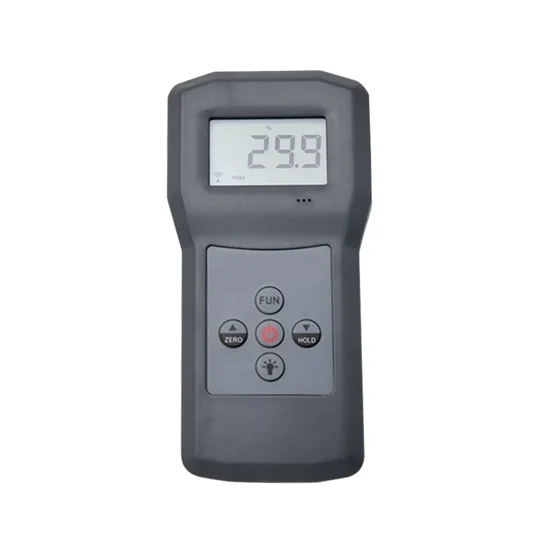
A handheld concrete moisture meter is a portable device used to measure the moisture content of concrete. The meter works by using various technologies such as electrical resistance or capacitance to assess the moisture level within the concrete.
Features:
- Data hold function and low battery alert.
- Concrete moisture meter can testing 10 kinds of materials with different codes.
- It is portable, compact, easy to use and the moisture measurement readings are instant.
- Digital display with back light gives exact and clearly reading although you stay at the somber conditions.
- The moisture meter operates by high-frequency principle and has automatic temperature compensation.
- Manual off at any time. Auto power off after 5 minutes from last operation.
Specification:
| Model | ATO-MS300 | |
| Display | 4 digital LCD | |
| Measuring Range | 0-70% | |
| Operating Conditions | Temperature: 0-60 °C | Humidity: 5%-90% RH |
| Accuracy | ± 0.5 (main moisture range) | |
| Operation | electrical resistance method, automatic temperature compensation | |
| Power Supply | 4×1.5 AAA size (UM-4) battery | |
| Dimension | main unit 140 mm×60 mm×22 mm | |
| Net Weight | 120g (not including batteries) |
Structure:
Application:
Tips: How to Measure Moisture in Concrete?
- Moisture meters. These handheld devices use electrical resistance or capacitance to measure moisture levels in concrete. They typically have pins or electrodes that are inserted into the concrete surface, and the readings are displayed on a screen.
- Calcium chloride test. This method involves placing a sealed container with calcium chloride on the concrete surface and leaving it for a specified period. The change in weight of the container is then measured, and the moisture content is calculated based on the moisture absorption by the calcium chloride.
- Relative humidity probes. These probes are inserted into pre-drilled holes in the concrete to measure the relative humidity within the slab. The readings provide an indication of the moisture condition within the concrete.
- Infrared thermography. This non-destructive method uses thermal imaging cameras to detect temperature differences on the concrete surface.
Reviews
There are no reviews yet.