
Description
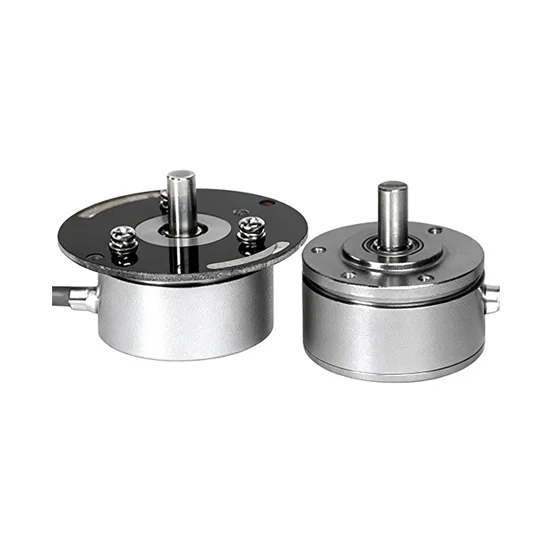
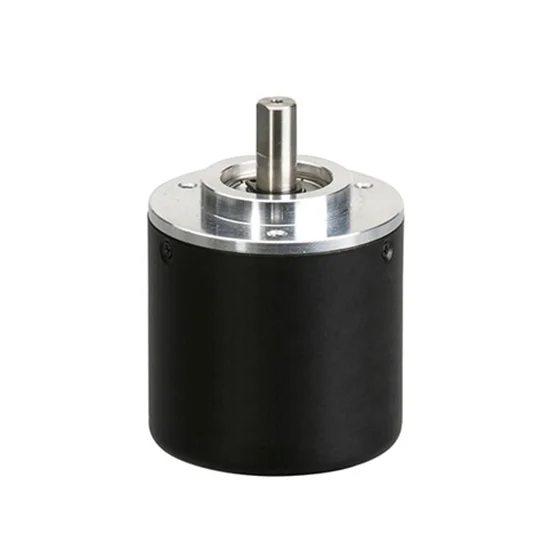
Choose the high-precision hall effect angle transducer from ATO Automation Shop.Non-contact angle sensor covers a measurement range of 0-360°, with three optional output signals: 0-5V, 4-20mA and RS485. It has an IP65 protection rating and a mechanical lifespan of 100 million rotations. It is your capable assistant in various fields such as electric vehicles and industrial automation.
Specification
| Model | ATO-GTC |
| Effective Electrical | Analog Rotation Angle 360° |
| Operating Voltage | 10-24V DC |
| Output Signal | 0-5V/4-20mA/RS485 |
| Resolution | 4096, 12-bit |
| Independent Linear Accuracy | 0.15%FS |
| Update Speed | 0.2ms |
| Operating Current | <10.5mA |
| Start-End Output Deviation | <0.5%·VCC |
| Load Resistance | >10KΩ |
| Mechanical Rotation Angle | 360° (No Stop Position) |
| Protection Level | IP65 |
| Operating Temperature | -30℃~+80℃ |
| Storage Temperature | -30℃~+80℃ |
| Rotational Torque | <10mN·m |
| Mechanical Life | >100,000,000 Rotations |
| Weight | 15g |
| Material | Shell: Aluminum Alloy, Anodized Surface Shaft: Stainless Steel |
| Electrical Wiring | Directly Leads Out 250mm Power Signal Wire |
Features
- Measurement range and accuracy: The magnetic angle sensor has a measurement range of 0-360° and an independent linear accuracy of 0.15% FS.
- Output signals: 3 output signals of 0-5V/4-20mA/RS485 are optional.
- Operating voltage: The non-contact angle sensor operates at 10-24V DC.
- Protection level and machine life: IP65, 100 million rotations.
Dimensions (Unit: mm)
Details
Application
Tips: What is the working principle of a Hall effect angle sensor?
Hall effect angle sensor is a non-contact “electronic ruler” for measuring angles — it can accurately capture rotational or tilt angles without touching the measured object, and then convert the angle into an electrical signal to transmit to the device.
Its core lies in the “Hall effect”: when the Hall element inside the sensor is energized and paired with a built-in magnet, the direction of the magnetic field changes as the magnet rotates with the measured object. As the magnetic field changes, the voltage output by the Hall element changes accordingly — the amount of angular rotation corresponds to a proportional change in voltage, essentially translating “angle” into an “electrical signal”. The device (such as a car’s control system) receives this electrical signal, enabling it to know the exact rotation angle of the measured object in real time and respond accordingly.
Reviews
There are no reviews yet.