
Description
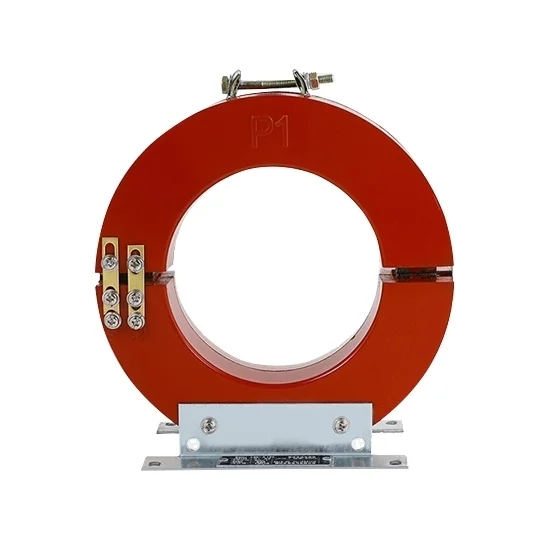
ATO core balance current transformer has 300/1A-600/1A, 5P10 accuracy, can provide reliable current measurement, and is suitable for power system monitoring and protection. No matter the size of your project, we offer CBCT transformers in a variety of sizes to meet different needs while ensuring economy and performance.
Specification
| Model | ATO-LXK | |||
| Transformation Ratio | 300/1A | 400/1A | 500/1A | 600/1A |
| Accuracy Class | 5P10 | |||
| Rated Output | 7.5VA | 10VA | 12.5VA | 15VA |
| Rated Frequency | 50Hz | |||
| Rated Secondary Current | 1A | |||
| Pore Diameter Optional | 80/120/140/160/200(mm) | |||
| Net Weight | 4.5kg |
Overall Dimensions Drawing (unit: mm)
Features
Tips: Core Balance Current Transformer Working Principle
- Electric Current Sensor: Main structure of electric current flow, one of the common electric current interactive sensor. However, the CBCT does not have an electric current mutual sensor core, so it is both an equilibrium support structure structure, and ct meter wire field is located on both sides of the main structure.
- Magnetic Field Equilibrium: Under normal current conditions, the main and supporting structures are in production phase, but the magnetic field is reciprocal, and the working field is maintained in equilibrium. This is the core equilibrium feature of cb current transformer, which ensures mutual resistance between the magnetic fields.
- Unbalanced Electric Current Control: As a result, if there is an unbalanced electric current in the system, if there is a ground fault or a leakage electric current, the magnetic field balance between the main structure and the supporting structure will be destroyed. CBCT sensory input arrives unbalanced, the output signal is one electric current mutual sensor output signal, there is a different normal electric current in the asserted system.
- Failure: The CBCT output signal is normally used to protect the system, and the power system is disconnected from the system due to a failure. This helps ensure high power system safety and flexibility.
Reviews
There are no reviews yet.