
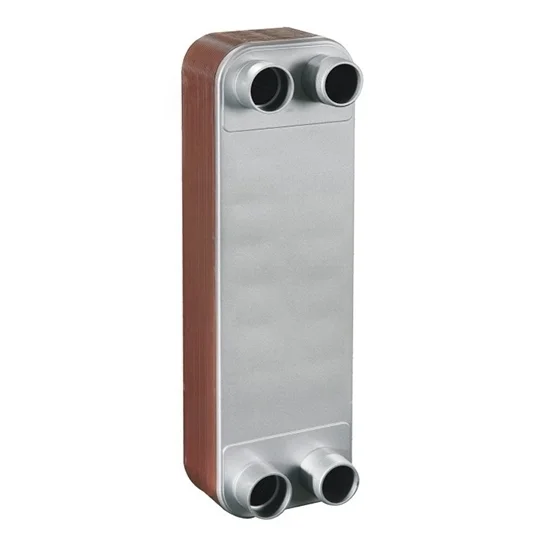
Description
Medium flow direction is counter flow (the primary and secondary flow direction is parallel and opposite).
Note: Non-standard customized products, for different plate quantities, price is different, the page price is for reference only. Please contact us for specific price.
Specification
| Model | ATO-PHE-090 | ATO-PHE-095 | ATO-PHE-136 | ATO-PHE-210 | ATO-PHE-310 | |
| Max Quantity of Plates | 250 | 250 | 250 | 250 | 300 | |
| Heat Exchange Capacity | BTU | 96k~610k | 102k~680k | 205k~680k | 510k~1500k | 510k~1900k |
| W | 28k~180k | 30k~200k | 60k~200k | 150k~450k | 150k~550k | |
| Heat Exchange Area/Per Plate | 0.090m2 | 0.095m2 | 0.136m2 | 0.210m2 | 0.310m2 | |
| Volume/Per Channel | 0.193L | 0.21L | 0.25L | 0.40L | 0.75L | |
| Max Flow | 35m3/h | 35m3/h | 70m3/h | 105m3/h | 150m3/h | |
| Channel* | H | H, L, M | H | H | H | |
| Designed Pressure | 3.0/4.5MPa | 3.0/4.5MPa | 3.0/4.5MPa | 2.5MPa | 2.5MPa | |
| Size | 568*190mm | 617*192mm | 490*250mm | 739*322mm | 985*370mm | |
| Weight (kg, n is the plates quantity) | 4.2+0.40n | 4.6+0.44n | 6.5+0.42n | 13+0.82n | 31+1.2n | |
| Liquid Side Maximum Threaded | 2″ | 2″ | 3″ | 4″ | 5″ | |
| Fluorine Side Maximum Thread | 2″1/8 | 2″1/8 | 3″1/8 | 4″ | 5″ | |
| Distributor | H | HQ, LQ, MQ | HQ | HQ | HQ | |
| Flange | – | – | – | 3″, 4″ | 3″, 4″, 5″ | |
| Medium Flow Direction | counter flow | |||||
| Certification | CE | |||||
| Plate Thickness | 0.4mm | |||||
| Designed Temperature | -196℃~+200℃ |
*Channel Form Characteristics
L channel: low heat transfer coefficient, low resistance, suitable for large flow rate and weak heat transfer (low specific heat or small temperature difference), such as air heat transfer under ambient pressure.
H channel: high heat transfer coefficient, high resistance, suitable for small flow rate and strong heat transfer (high specific heat, with phase change or large temperature difference), such as refrigerant phase change heat transfer.
M channel: heat transfer coefficient and resistance are between H channel and L channel.
Dimension Drawing of Counter Flow Brazed Plate Heat Exchanger (unit: mm)
| Calculation method of size A | |||||
| Model | ATO-PHE-090 | ATO-PHE-095 | ATO-PHE-136 | ATO-PHE-210 | ATO-PHE-310 |
| A (mm) | 15+2.4n | 15+2.4n | 15+2.85n | 17+2.85n | 20+2.85n |
| A (mm) | 11+2.4n | 11+2.4n | 13+2.85n | 13+2.85n | 20+2.85n |
Application Occasion
- Air conditioner refrigeration system: water to cold medium, cold medium to cold medium
- Oil pressure system: water to oil, cold medium to oil
- Industrial cooling system: water to water
- Heating system: steam to water
- Air compressor system (cooling system/drying system) : water to oil, water to air, cold medium to air, air to air
Tips: Counter flow brazed plate heat exchanger troubleshooting.
| Malfunction | Cause | Solution |
| Liquid crossing |
|
|
| External leakage |
|
|
| Excessive pressure drop |
|
|
Reviews
There are no reviews yet.