
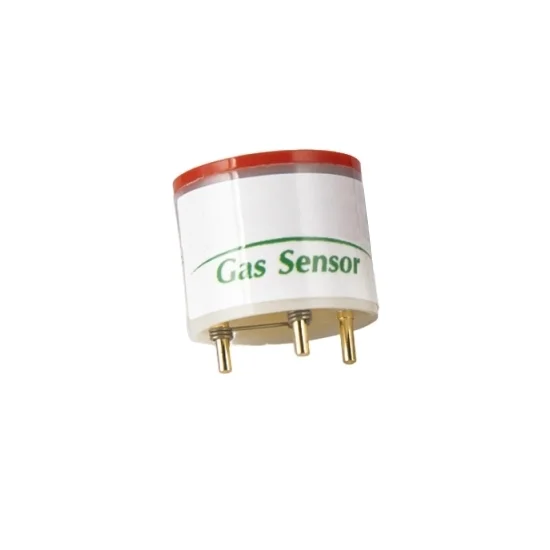
Description
ATO electrochemical CO sensor is specifically designed for accurate detection of carbon monoxide. It has service life of 3 years, detection range optional, a resolution of 1PPM, a response time of less than 25 seconds, and an accuracy of ±10%. Carbon monoxide sensor can work stably in environments with temperatures ranging from -30℃ to 50℃ and humidity ranging from 15% RH to 90% RH (without condensation). Carbon monoxide detection sensor features high precision, strong anti-interference capability, guaranteed quality, and fast response, suitable for various scenarios such as environmental quality testing, industrial robots, chemical plants, and coal mines, providing reliable guarantee for carbon monoxide detection in various fields.
Specification
| Model | ATO-S4-CO |
| Detection Principle | Electrochemical Three-electrode |
| Detected Gas | Carbon Monoxide (CO) |
| Detection Range | 0-20/0-100/0-1000/0-5000PPM Optional |
| Load Concentration | 2000PPM |
| Operating Voltage | DC 5V±0.5V |
| Output Signal | Current Signal |
| Sensitivity | 75±15nA/PPM |
| Zero Drift | ±2ppm |
| Resolution | 1ppm |
| Accuracy | ±10% |
| Response Time | <25s |
| Operating Pressure | 90-110kPa |
| Temperature Range | -30℃-50℃ |
| Humidity Range | 15%RH~90%RH (No Condensation) |
| Repeatability | <±2% Signal Value/Month |
| Long-term Stability | <2% Signal/Year |
| Linearity | Linear, Regression Coefficient R2=0.999 |
| Service Life | 3 Years |
Cross-interference Gas Table
| Interfering Gas | Gas Concentration (PPM) | Display value (PPM/CO) |
| H2 | 50 | 25 |
| SO2 | 20 | 0 |
| H2S | 100 | 0.5 |
| CL2 | 10 | 0.5 |
| NO | 50 | 10 |
| NO2 | 30 | 1 |
Features
- Accurate Detection: Detection range of CO is 0-5000ppm, with a resolution of 1ppm and an accuracy of ±10%. The indicators perform outstandingly and can meet your various detection needs.
- Fast Response and Strong Adaptability: The response time of carbon monoxide detection sensor is less than 25 seconds, and it can work stably under the conditions of -30℃ to 50℃, 15%-90% RH, and 90-110kPa pressure.
- Reliable Quality: Anti-interference, with a service life of up to 3 years, reducing maintenance and replacement costs.
Dimension
Detail
Basic Test Circuit
7 Tips for Using Electrochemical Carbon Monoxide Sensor
- Sensor pins must be connected via PCB sockets. Welding will damage the sensor, and the pins are prohibited from being bent.
- When carbon monoxide sensor is stored, the working electrode and the reference electrode should be in a short-circuit state.
- The sensor should avoid contact with organic solvents, alcohol, paints, oils, high-concentration gases, as well as silica gel and other adhesives.
- Electrochemical sensors with positive output current (such as CO, H2S, SO2, NH3, etc.) require oxygen to participate in the reaction during operation. They should be calibrated and tested with standard gases using air as the background gas; otherwise, the performance of the sensor will be damaged.
- CO sensor cannot be used in an environment containing corrosive gases for a long time, as corrosive gases will damage the sensor.
- It is recommended to calibrate with the target gas; the cross-sensitivity will have a variation range of +30%. If calibrated with cross-sensitive gases, the accuracy of its calibration and measurement is not guaranteed.
- ATO electrochemical carbon monoxide sensor is not recommended to test the sensor with non-standard methods, such as placing the sensor directly on concentrated ammonia water, spraying cigarette smoke at the sensor, approaching the sensor with a lit lighter, breathing at the sensor, placing the sensor close to alcohol, etc.
Reviews
There are no reviews yet.