
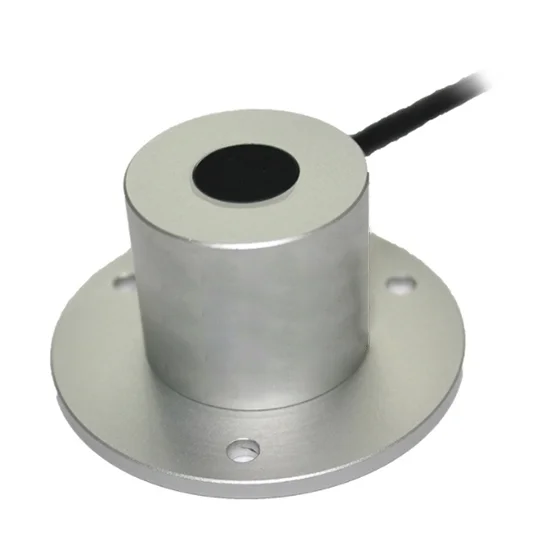
Description
High quality UV radiation sensor is widely used in the exposure caused erythema dose, integrated environment ecological effect, the study of climate change and ultraviolet radiation monitoring and forecast. The lightweight construction and IP65 waterproofing give the ultraviolet radiation sensor a long service life.
Features:
- Light weight and long service life.
- High sensitivity and low power consumption.
- No moving parts, no maintenance, UV radiation sensor can work in any altitude.
Specification:
| Model | ATO-RK200-07 |
| Spectral Range | 280-400 nm |
| Supply | 5V, 12-24V DC |
| Range | 0-200 W/m2, 0-200 μW/cm2 (only for 0-2V output), 0-15 UV index |
| Output | 0-2V, 4-20mA (2 wires), 0-5V, RS485 |
| Accuracy | ±5% rdg |
| Response Time | ≤ 1s |
| Cosine Correction | ≤ ±4% (solar elevation angle=10°) |
| Non-linearity | < ±3% |
| Temperature Effect | ±0.08%/℃ |
| Stability | ≤ ±2%/year |
| Operating Temperature | -40 ℃— +80 ℃ |
| Ingress Protection | IP65 |
| Weight (unpacked) | 150 g |
| Shell Material | Aluminum alloy |
| Storage Condition | 10 ℃—60 ℃, 20%—90% RH |
| Certification | CE |
| Warranty | 12 months |
Dimension (mm):
Application:
Tips: What is Ultraviolet?
Ultraviolet (UV) is a form of electromagnetic radiation with wavelength from 10 nm (with a corresponding frequency around 30 PHz) to 400 nm (750 THz), shorter than that of visible light, but longer than X-rays. UV radiation is present in sunlight, and constitutes about 10% of the total electromagnetic radiation output from the Sun. It is also produced by electric arcs and specialized lights, such as mercury-vapor lamps, tanning lamps, and black lights. Although long-wavelength ultraviolet is not considered an ionizing radiation because its photons lack the energy to ionize atoms, it can cause chemical reactions and causes many substances to glow or fluoresce. Consequently, the chemical and biological effects of UV are greater than simple heating effects, and many practical applications of UV radiation derive from its interactions with organic molecules.



Reviews
There are no reviews yet.