
Description
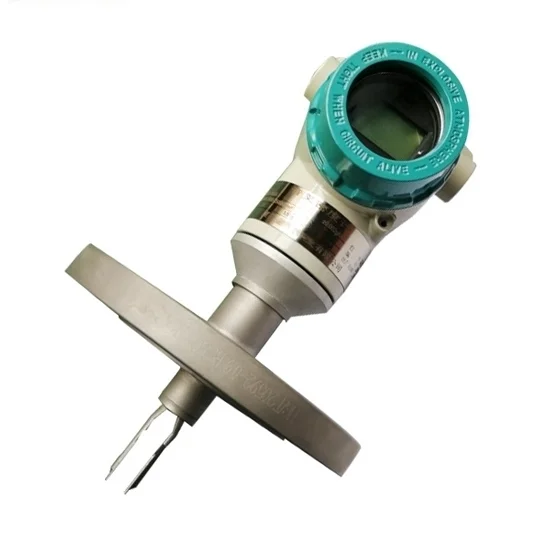
Low price digital tuning fork density meter is mainly composed of a transmitter, a vibrating fork body and a temperature measuring element, which can be used for measuring different chemical liquids.
Specification
- Model: ATO-APX301-CH
- Application: Used in chemical industry
- Measuring Range: 0 – 2.5 g/cc (0 – 2500 kg/m3), 0~100.0%
- Calibration Range: 0 – 2.5 g/cc (0 – 2500 kg/m3), 0~100.0%
- Measurement Accuracy: ± 0.002 g/cc (± 2 kg/m3), ±0.5%
- Repeatability: ± 0.001 g/cc (± 0.2 kg/m3) ±0.1%
- Medium Temperature Range: -50℃ ~ +150℃
- Working Pressure (Optional): 0.2~0.3MPa, Max. Pressure ≤4MPa
- Fluid Viscosity Range: 0 – 600Cp
- Media Temperature (Optional): 0~100℃, 0~150℃
- Temperature Coefficient: <0.1 kg/m3/℃ (± 0.5%) After Correction
- Stress Effect: Negligible
- Built-in Temperature Sensor: Digital Sensor
- Wetted Material (Optional): 316 Stainless Steel, 316 Stainless Steel + PTFE, 316 Stainless Steel +PFA, 2205 Stainless Steel, Hastelloy Alloy C276, Titanium Alloy
- Electrical Connection (Optional): M20*1.5, G1/2, NPT1/2
- Connection Type (Optional): G1/2” Thread, DN50 Flanged, DN80 Flanged, 1/2” Trip Clamp, 2” Trip Clamp
- Fork Body Coating: Standard PTFE or PFA
- Power Supply: 24VDC, ≥50mA
- Analog Signal Output: 4-20mA, 0-1000Hz, RS485 Modbus, 4 Wires
- Output Accuracy (20℃): ± 0.1% of reading or ± 0.05% FS
- Output repeatability (-40~+85℃): ± 0.05% FS
- Protection Level: IP65
- Shell: Aluminum Alloy
Dimensions (Unit: mm)
Wiring diagram
Tips: Advantages and disadvantages of tuning fork density meter
- Advantages: Simple installation, plug and play, maintenance-free. The density of mixed media containing solids or air bubbles can be measured.
- Disadvantages: The density meter is not ideal for measuring media that are easy to crystallize and scale.
Reviews
There are no reviews yet.